Current Lab Members
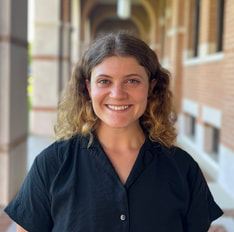
Annie Finneran, PhD Student in Ecology & Evolutionary Biology, Rice University
I am passionate about interdisciplinary science and its role in macroecology and conservation (and all fields of science!). I enjoy looking at “the big picture” of anthropogenic change from different perspectives to try and understand the drivers, consequences, and potential solutions to biodiversity threats. Currently, I am examining the impact of primary productivity and fragmentation on mammal food web structure in sub-Saharan Africa using computer engineering and remote sensing techniques. I also plan to incorporate aspects of anthropology through local interviews about views of biodiversity, both in Houston and abroad.
I am passionate about interdisciplinary science and its role in macroecology and conservation (and all fields of science!). I enjoy looking at “the big picture” of anthropogenic change from different perspectives to try and understand the drivers, consequences, and potential solutions to biodiversity threats. Currently, I am examining the impact of primary productivity and fragmentation on mammal food web structure in sub-Saharan Africa using computer engineering and remote sensing techniques. I also plan to incorporate aspects of anthropology through local interviews about views of biodiversity, both in Houston and abroad.

Chia Hsieh, PhD Candidate in Ecology & Evolutionary Biology, Rice University
Google Scholar
I am broadly interested in understanding the roles of environmental factors and biotic interactions in driving community structure and its associated ecosystem functions across spatial and temporal scales in the changing world. By integrating multiple broad-scale datasets of species occurrence and remote sensing products, my current research focuses on investigating the underlying evolutionary and ecological processes driving phylogenetic and functional structure, as well as trophic interactions of pantropical vertebrate communities.
Google Scholar
I am broadly interested in understanding the roles of environmental factors and biotic interactions in driving community structure and its associated ecosystem functions across spatial and temporal scales in the changing world. By integrating multiple broad-scale datasets of species occurrence and remote sensing products, my current research focuses on investigating the underlying evolutionary and ecological processes driving phylogenetic and functional structure, as well as trophic interactions of pantropical vertebrate communities.

Dr. Lydia Beaudrot, Principle Investigator
Assistant Professor Department of BioSciences Program in Ecology & Evolutionary Biology Rice University Houston, TX 77005 (713) 348 - 2511 beaudrot [at] rice.edu Google Scholar ORCID 0000-0001-8135-7519 |
Curriculum Vitae

| ||
Visiting Scholars

Andrea Vallejo Vargas, PhD student on the Empty Forests and Extinction Filters project at the Norwegian University of Life Sciences (10/2022-12/2022), Google Scholar
I use long-term monitoring datasets such as camera traps and capture-mark recapture sampling to assess behavioural patterns and population dynamic trends. Currently, I use statistical models to assess activity patterns of tropical terrestrial mammals, compare them across biogeographic regions, and assess the effects of environmental, and anthropogenic factors on species behaviour. Also, I work on models to assess the population dynamics such as the survival of species in fragmented habitats.
I use long-term monitoring datasets such as camera traps and capture-mark recapture sampling to assess behavioural patterns and population dynamic trends. Currently, I use statistical models to assess activity patterns of tropical terrestrial mammals, compare them across biogeographic regions, and assess the effects of environmental, and anthropogenic factors on species behaviour. Also, I work on models to assess the population dynamics such as the survival of species in fragmented habitats.
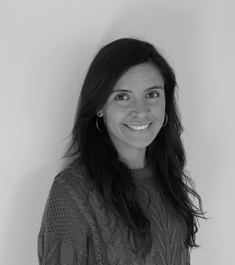
Asunción Semper Pascual, Postdoc on the Empty Forests and Extinction Filters project at the Norwegian University of Life Sciences (10/2022 - 11/2022), Google Scholar
My main interests are focused on understanding how different factors, such as land-use change, hunting pressure and climate change, shape biodiversity patterns. I am particularly interested in finding out why, when and where species are likely to go extinct in tropical forests. To do so, I use novel statistical analyses and develop approaches which help to spatially identify threats to biodiversity, and reveal how such threats change over time. I conduct policy relevant research by developing approaches that can be addressed by conservation strategies to prevent species' extinctions. In my current project I am investigating how different factors such as habitat loss, habitat fragmentation or hunting pressure relate to occupancy, local extinction and colonization rates of mammal species across the global tropical, and whether species characteristics can help to understand these relationships.
My main interests are focused on understanding how different factors, such as land-use change, hunting pressure and climate change, shape biodiversity patterns. I am particularly interested in finding out why, when and where species are likely to go extinct in tropical forests. To do so, I use novel statistical analyses and develop approaches which help to spatially identify threats to biodiversity, and reveal how such threats change over time. I conduct policy relevant research by developing approaches that can be addressed by conservation strategies to prevent species' extinctions. In my current project I am investigating how different factors such as habitat loss, habitat fragmentation or hunting pressure relate to occupancy, local extinction and colonization rates of mammal species across the global tropical, and whether species characteristics can help to understand these relationships.
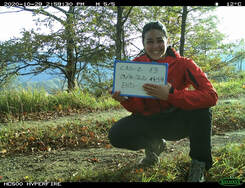
Ilaria Greco, PhD Student in Evolutionary Biology and Ecology, University of Florence (11/2021 - 1/2022), Google Scholar
My research interests focus on the study of medium-to-large wild mammalian populations and communities in tropical forests at multiple spatial scales, by using presence/absence data from camera trapping coupled with the analytical framework of occupancy. I am interested the response of populations of species of conservation concern to different degrees of habitat quality and anthropogenic disturbance to assess variation in their occurrence, determine habitat selection preferences, and assess their vulnerability. I am also interested the structure and richness of mammalian communities across the tropical forest biome to see how they change globally with increasing human pressure and environmental change.
My research interests focus on the study of medium-to-large wild mammalian populations and communities in tropical forests at multiple spatial scales, by using presence/absence data from camera trapping coupled with the analytical framework of occupancy. I am interested the response of populations of species of conservation concern to different degrees of habitat quality and anthropogenic disturbance to assess variation in their occurrence, determine habitat selection preferences, and assess their vulnerability. I am also interested the structure and richness of mammalian communities across the tropical forest biome to see how they change globally with increasing human pressure and environmental change.
Undergraduate Researchers

Mallory Tucker, BIOS 310, Fall 2023 & Spring 2024
Sarah Yao, BIOS 310, Spring 2022
Citlali Villarreal, BIOS 401 Fall 2020
Ava Johnson, BIOS 310 Fall 2020
Hannah Vincent, EEB 306 Fall 2019
James Ahn, EEB 306 Summer 2019
Braulio Garcia, EEB 306 Summer 2019
Sarah Yao, BIOS 310, Spring 2022
Citlali Villarreal, BIOS 401 Fall 2020
Ava Johnson, BIOS 310 Fall 2020
Hannah Vincent, EEB 306 Fall 2019
James Ahn, EEB 306 Summer 2019
Braulio Garcia, EEB 306 Summer 2019
Lab Alumni
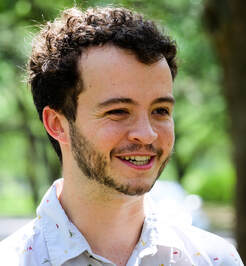
Dr. Dan Gorczynski, PhD in Ecology & Evolutionary Biology, Rice University, 2023
Google Scholar
I am generally interested in functional diversity of large mammal communities in tropical systems and how functionality determines community assemblage and dynamics. My current project is looking at functional diversity turnover in the large mammal community at Volcan Barva, Costa Rica, a site that is part of the TEAM Network. I've done research on large mammal trophic interactions and conservation in Minnesota as well as in Brazil.
Google Scholar
I am generally interested in functional diversity of large mammal communities in tropical systems and how functionality determines community assemblage and dynamics. My current project is looking at functional diversity turnover in the large mammal community at Volcan Barva, Costa Rica, a site that is part of the TEAM Network. I've done research on large mammal trophic interactions and conservation in Minnesota as well as in Brazil.
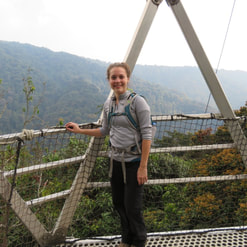
Dr. Jennifer Moore, Postdoc, 2018-2019
My research answers questions about wildlife population ecology using statistical models and geospatial analyses – how many of a species are in an area, how are they distributed, and what factors affect the abundance and distribution of each species. In particular, I am interested in the effect of illegal human activities such as poaching on wildlife populations over time and space within protected areas. My research focuses on African wildlife, specifically mammals, and I have conducted research in Madagascar, Gabon, and currently in Rwanda.
Google Scholar
My research answers questions about wildlife population ecology using statistical models and geospatial analyses – how many of a species are in an area, how are they distributed, and what factors affect the abundance and distribution of each species. In particular, I am interested in the effect of illegal human activities such as poaching on wildlife populations over time and space within protected areas. My research focuses on African wildlife, specifically mammals, and I have conducted research in Madagascar, Gabon, and currently in Rwanda.
Google Scholar
